
Home  /  Posts tagged "Modern Wall Art"

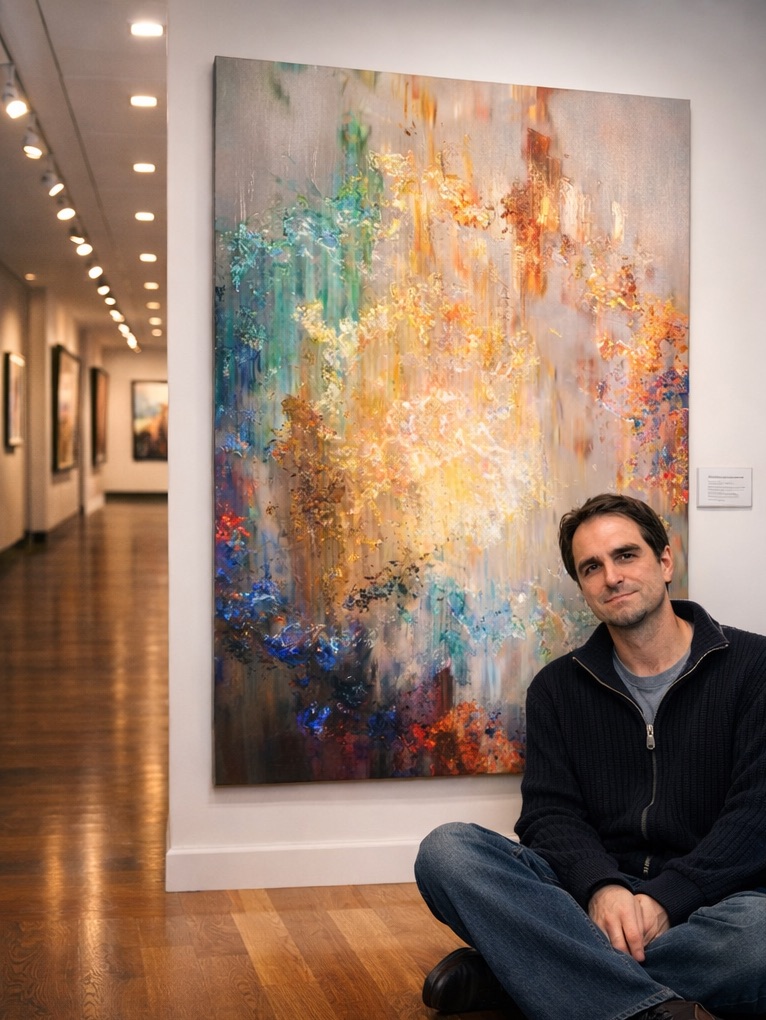
Abstract art often appears spontaneous, as if it emerged fully formed from color and motion. But behind many abstract works is a process of discovery, experimentation, and careful refinement. For contemporary artist Jaison Cianelli, the journey toward a finished artwork begins with exploration—layering photography, digital techniques, and painterly textures into luminous compositions that evoke nature, energy, and atmosphere.

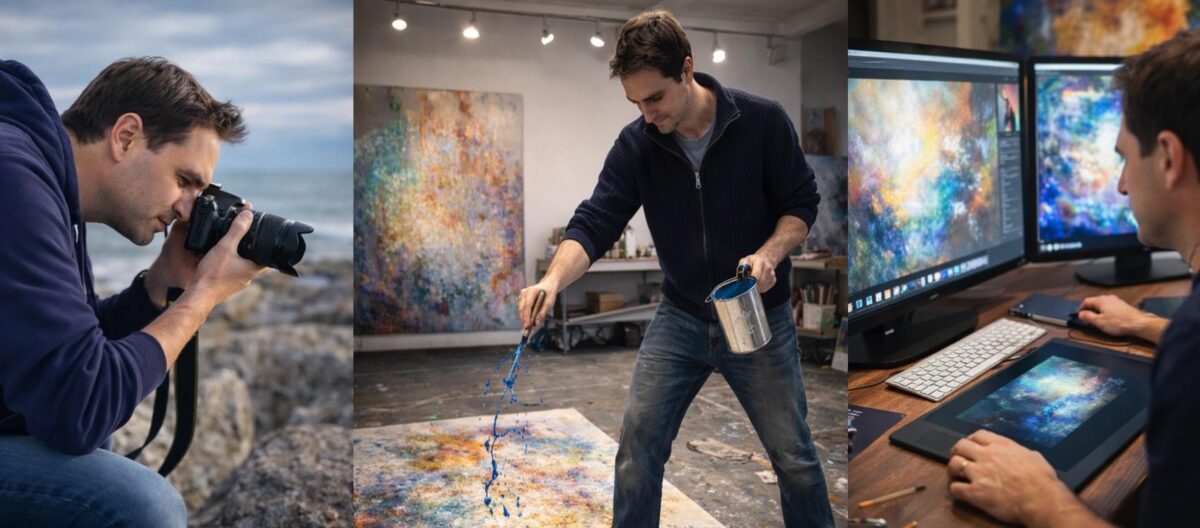
Cianelli’s work lives at the intersection of digital art, photography, and traditional painting. His oversized and large-scale abstract art pieces are created by blending multiple visual elements in a layered process that allows forms and colors to evolve organically. Rather than starting with a rigid plan, the artist often begins with a photograph or natural texture, which becomes the foundation for the composition.

From there, the image is transformed through experimentation that could be classified as digital abstract expressionism.

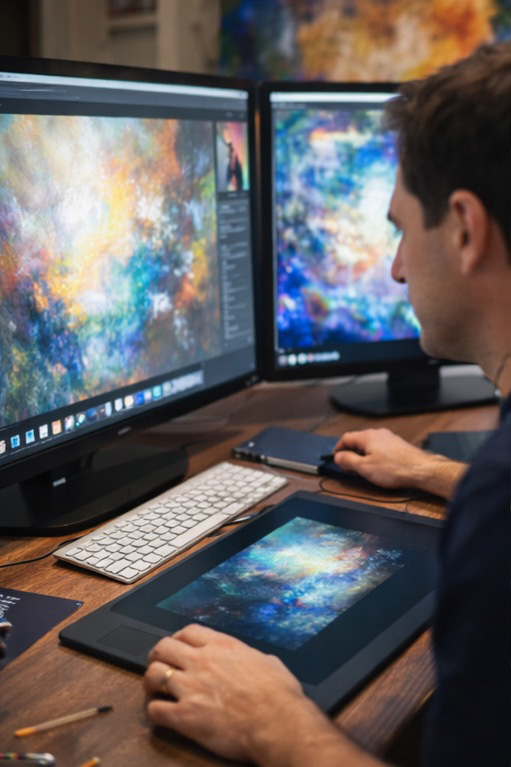
Textures may be altered using specialized visual tools, layered with photographs of real paint brush strokes, and blended repeatedly in Photoshop until a complex visual environment begins to emerge. This stage of the process is highly exploratory. Images may shift dramatically as layers are added, removed, and rebalanced. Colors evolve, forms dissolve and reappear, and the artwork gradually begins to reveal its direction.

For Cianelli, the most important moment arrives when the image suddenly feels alive.

“I know right away if I have something,” he says. “It’s a special feeling.”

That recognition is not purely intuitive—it is the result of years of visual experience. At a certain point in the layering process, composition, color harmony, and movement align in a way that creates emotional clarity. When that moment happens, the artist knows the piece is moving toward completion.

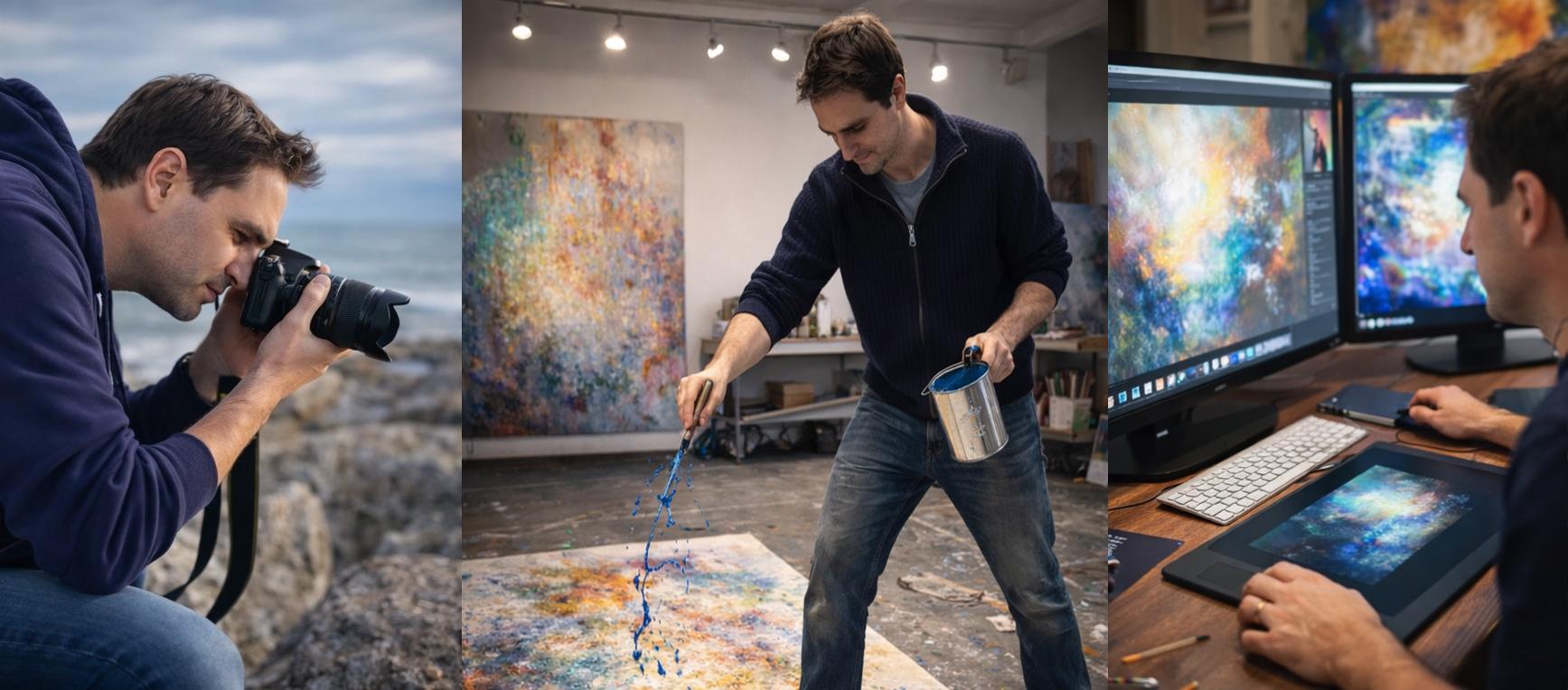
Artist taking a photograph

From there, the image is transformed through experimentation.

Textures may be altered using specialized visual tools, layered with photographs of real paint brush strokes, and blended repeatedly in Photoshop until a complex visual environment begins to emerge. This stage of the process is highly exploratory. Images may shift dramatically as layers are added, removed, and rebalanced. Colors evolve, forms dissolve and reappear, and the artwork gradually begins to reveal its direction.

For Cianelli, the most important moment arrives when the image suddenly feels alive.

“I know right away if I have something,” he says. “It’s a special feeling.”

That recognition is not purely intuitive—it is the result of years of visual experience. At a certain point in the layering process, composition, color harmony, and movement align in a way that creates emotional clarity. When that moment happens, the artist knows the piece is moving toward completion.

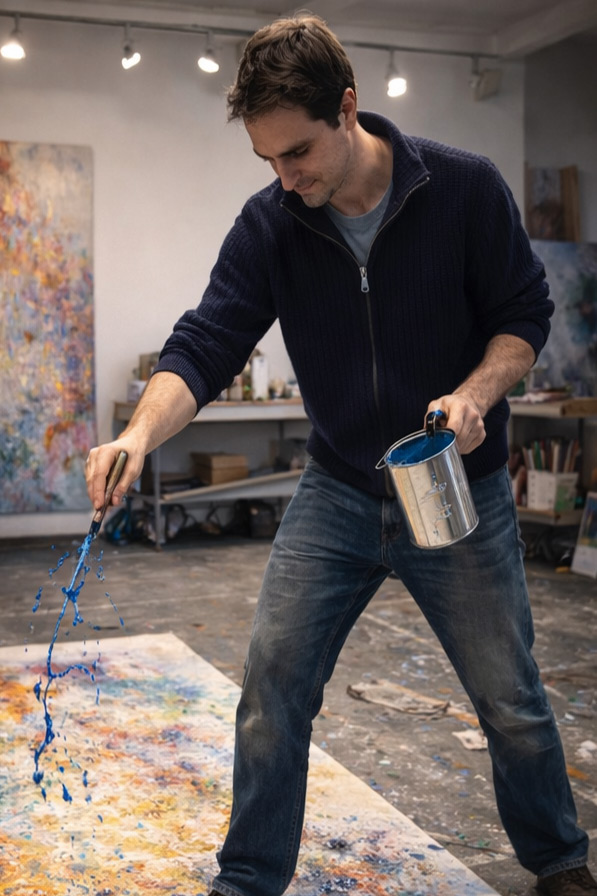
Abstract artist applying paint splatter to canvas

But the process doesn’t end there.

Stepping away from the artwork is an important part of refinement. Distance allows the artist to return with a fresh perspective, adjusting subtle variations in color, contrast, and visual balance. In abstract work, even small changes can significantly affect the overall energy of the piece.

“Color variations are infinite,” Cianelli explains. “At some point I have to draw the line and say it’s good—it’s done.”

Not every experiment reaches that stage. Many compositions remain unfinished, becoming part of a growing archive of textures and visual studies. These fragments are not discarded entirely; instead, they often serve as raw material for future artworks. Elements created years earlier may suddenly become the perfect foundation for a new composition.

This evolving library of imagery contributes to the distinctive character of Cianelli’s mixed media work. His paintings frequently evoke natural textures and imagery—water, mineral patterns, atmospheric clouds, feathers, light patterns, or flowing landscapes—while remaining entirely abstract. The layered textures and luminous color transitions give the impression that light is moving through the image rather than simply sitting on the surface, resulting in abstract nature art that feels alive and moving.

Digital mixed media artist Jaison Cianelli creating art on the computer

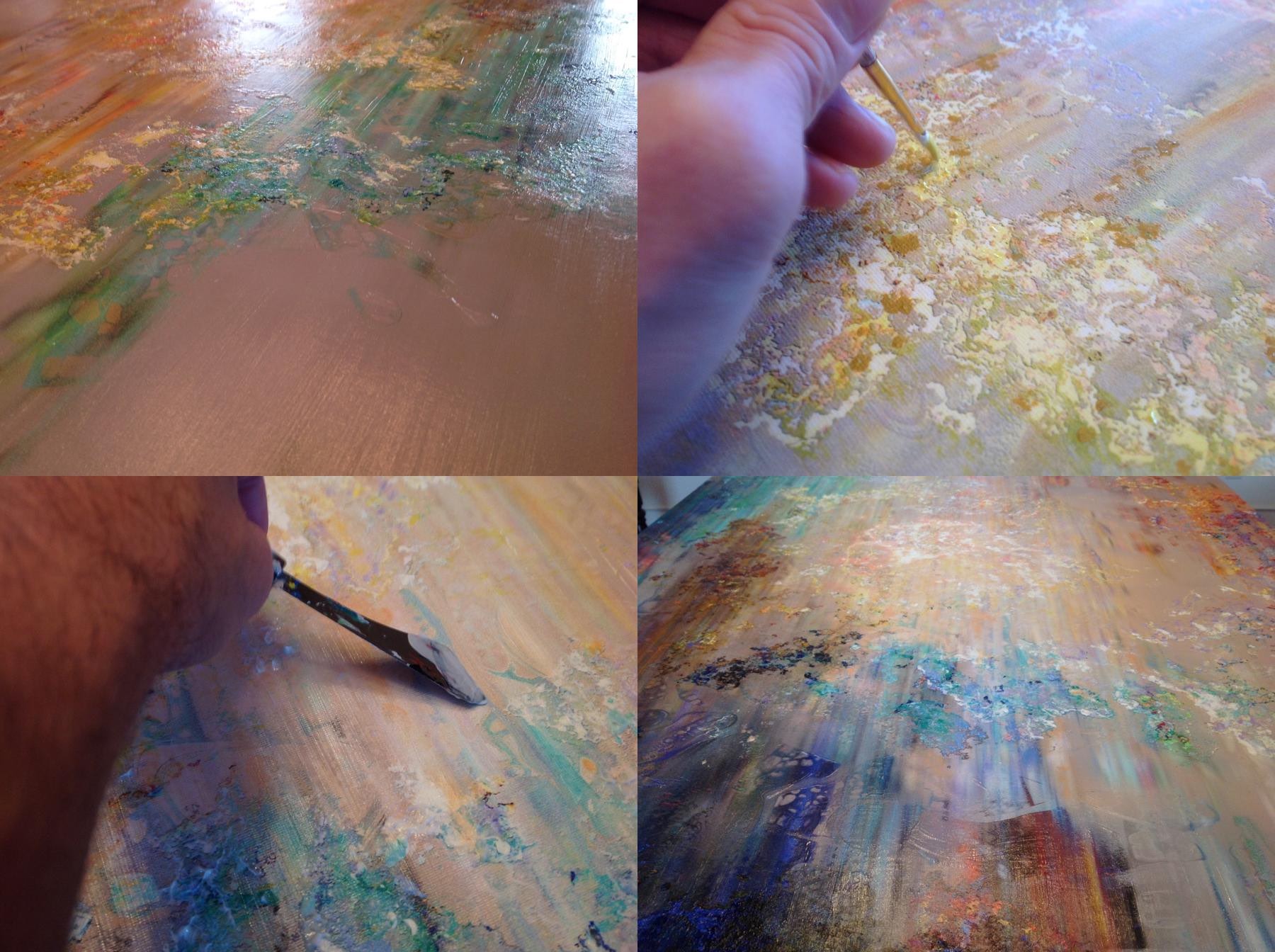
Once a piece is completed digitally, it is produced as large-scale wall art on canvas or other materials such as acrylic and metal. Sometimes embellishments are applied on top of the surface such as paint and brush stroke texture with gloss varnish.

The expansive panoramic formats that often appear in his work make the paintings especially well suited for modern interiors. Installed above sofas, in hotel lobbies, or along architectural corridors, the artwork becomes a visual anchor within the space. If you are interested in learning more visit this article to read about Where Large Panoramic Abstract Art Works Best in Interior Design.

Pieces such as Mother Earth, Secret Garden, and Passion demonstrate the emotional range within Cianelli’s abstract language—from calm atmospheric diffusion to energetic bursts of color and motion.

Despite the technical tools involved, the goal remains deeply rooted in artistic exploration and abstract expressionism.

Each new piece begins the same way: with curiosity, experimentation, and the willingness to follow where the image leads.


Related Guide:

If you’re exploring options for large wall art, see our complete guide to choosing large abstract wall art for a broader overview.

Detail images of embellishment paint texture on A Heart So Big

Artwork has the power to shape how a space feels. In modern architecture—where interiors often feature open layouts, expansive walls, and minimal decoration—art is no longer simply an accessory. It becomes part of the environment itself.

Large abstract wall art is increasingly used by homeowners, interior designers, architects, and hospitality professionals to define the atmosphere of a room. Whether placed in a living room, hotel lobby, wellness clinic, or corporate office, the right artwork can introduce color, movement, and emotional tone that transforms the space.

Choosing the right artwork involves more than selecting something visually appealing. Designers carefully consider scale, color, architectural balance, and how the artwork influences the experience of the people who spend time in the space.

If you are interested in examples, here you will find contemporary abstract art for sale that designers choose for modern interiors, including many large-scale panoramic wall art pieces.

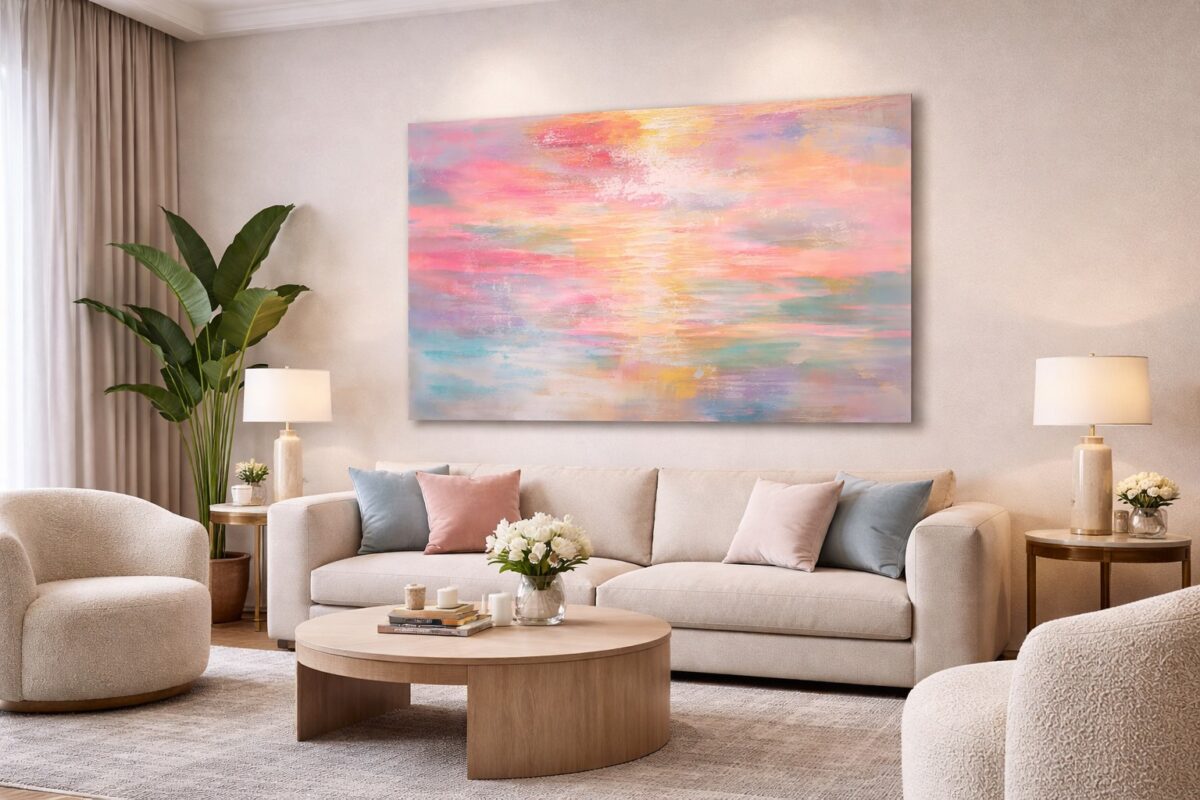
Large panoramic abstract wall art installed above a sofa in a contemporary living room interior.
Large panoramic abstract wall art installed above a sofa creates balance and visual focus in modern living rooms.

Understanding Abstract Art and Contemporary Styles

Before selecting artwork for a space, it helps to understand the broader context of abstract art and contemporary painting. Abstract art focuses less on literal representation and more on color, movement, and emotional expression.

This openness allows abstract art to adapt beautifully to many interior styles, from minimal modern architecture to warm residential environments.
If you’re new to the genre, the article Understanding Abstract Art offers a deeper explanation of how abstract painting works and why viewers often connect with it emotionally.

Many people also wonder how abstract art fits into the larger world of contemporary and modern art. The article Contemporary Art, Modern Art, and Abstract Art: What’s the Difference? explores how these artistic movements relate to one another.

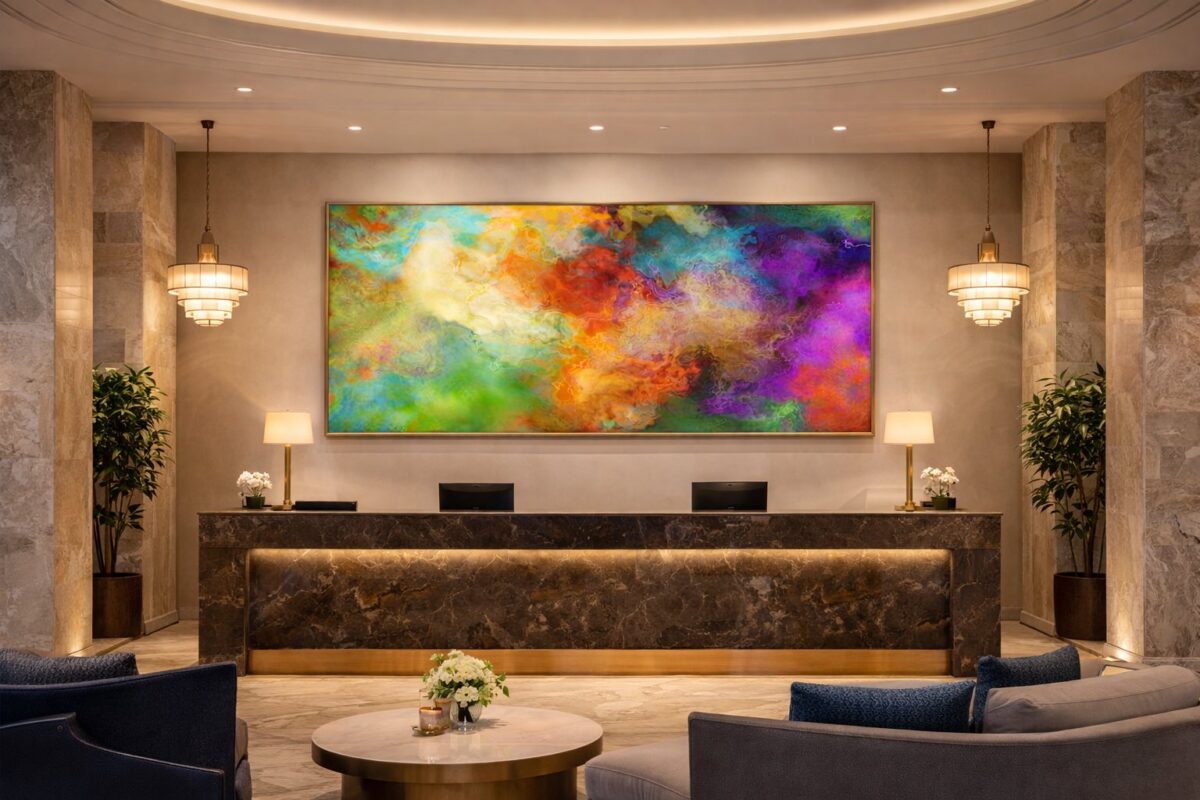
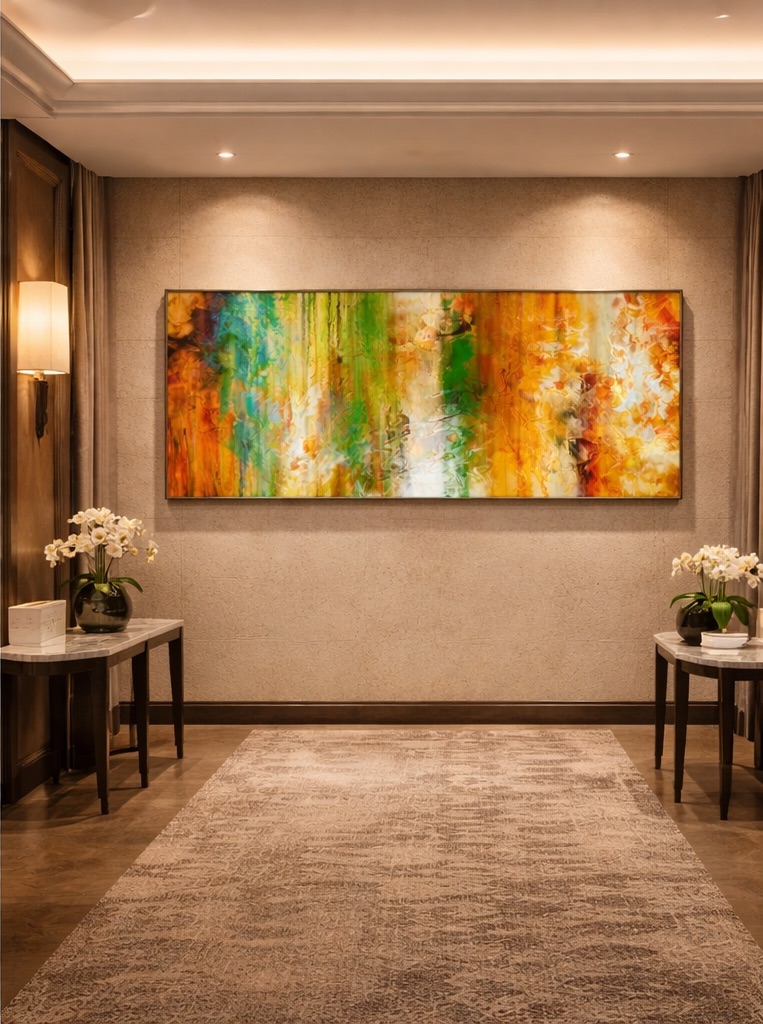
Large Abstract Art Installation in a Hotel Lobby
Mother Earth - Large abstract wall art used in a hotel lobby interior creates a memorable visual experience for guests.

Why Large Wall Art Matters in Modern Interiors

Modern interiors often feature high ceilings, large walls, and open floor plans. While these architectural elements create a sense of spaciousness, they also require artwork that can visually anchor the room.

Small pieces can feel disconnected from the surrounding architecture. Large artwork, on the other hand, helps establish a focal point and create visual balance across the wall. Large abstract paintings are particularly effective because they introduce movement and depth without imposing a literal narrative. Instead of depicting a specific subject, abstract compositions allow viewers to engage with the artwork in a personal way.

This openness makes abstract art extremely versatile. It can harmonize with many types of interior spaces—from residential homes to commercial environments—while still contributing emotional richness to the room. The article Why Buy Large Abstract Art explores how larger pieces can dramatically transform the atmosphere of a room.

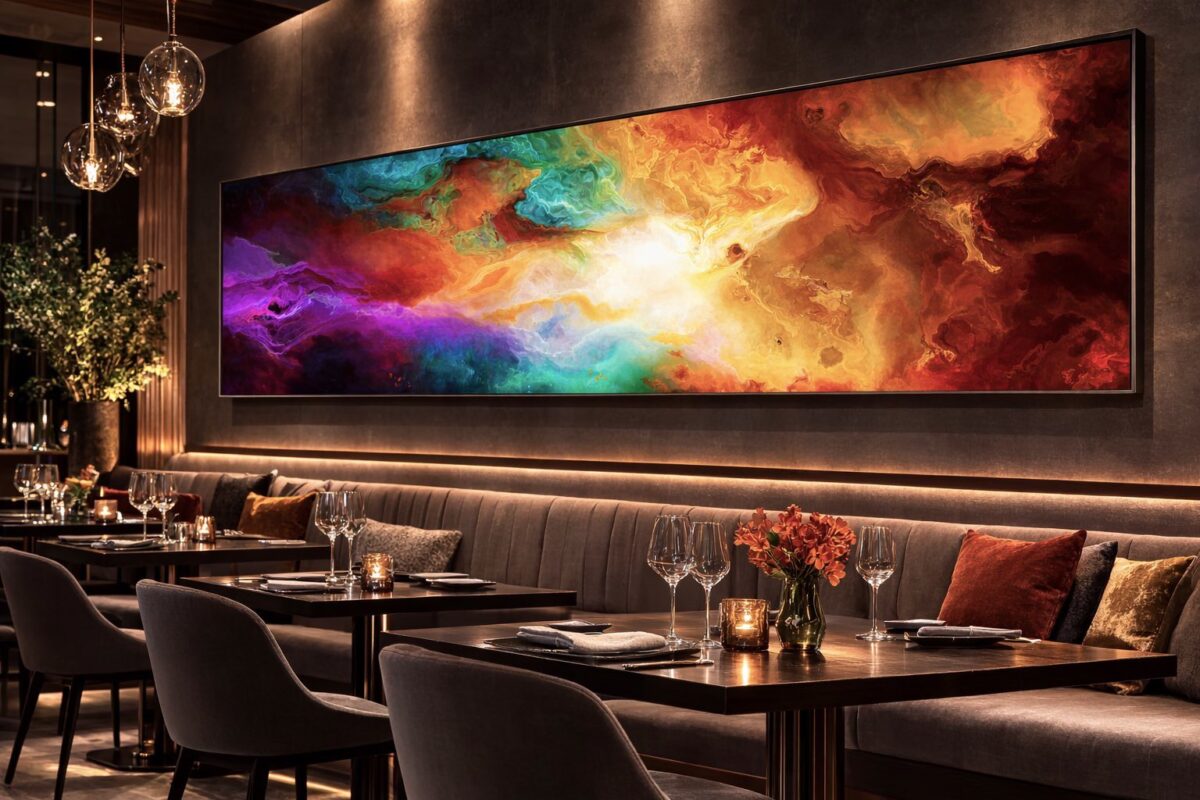
Oversized wide panoramic abstract wall art Becoming in modern restaurant
Large abstract paintings such as Becoming work beautifully in modern restaurant interiors.

Nature-Inspired Abstract Art and the Feeling of Connection

Many contemporary abstract artists draw inspiration from the natural world. Flowing forms, mineral-like textures, atmospheric color transitions, and organic movement often echo patterns found in water, stone, sky, and landscape.

Even when the artwork is completely abstract, these natural references can create a subtle sense of familiarity for the viewer. Humans have a deep psychological connection to nature. Studies in environmental psychology and biophilic design show that natural elements within an environment can help reduce stress, improve focus, and promote a sense of calm.

When abstract artwork incorporates qualities inspired by nature—such as fluid movement, layered textures, or organic color palettes—it can create a similar grounding effect. The viewer may not consciously recognize the reference, but the imagery often feels calming and intuitive.

This is one reason nature-inspired abstract art works especially well in environments designed for relaxation, reflection, and emotional balance.
You can explore this idea further in the article
Why We Love Nature-Inspired Abstract Art, which examines the connection between abstract imagery and natural forms. And You can also see how this idea relates to landscape-inspired abstraction in Abstract Landscape Paintings: What Are They?

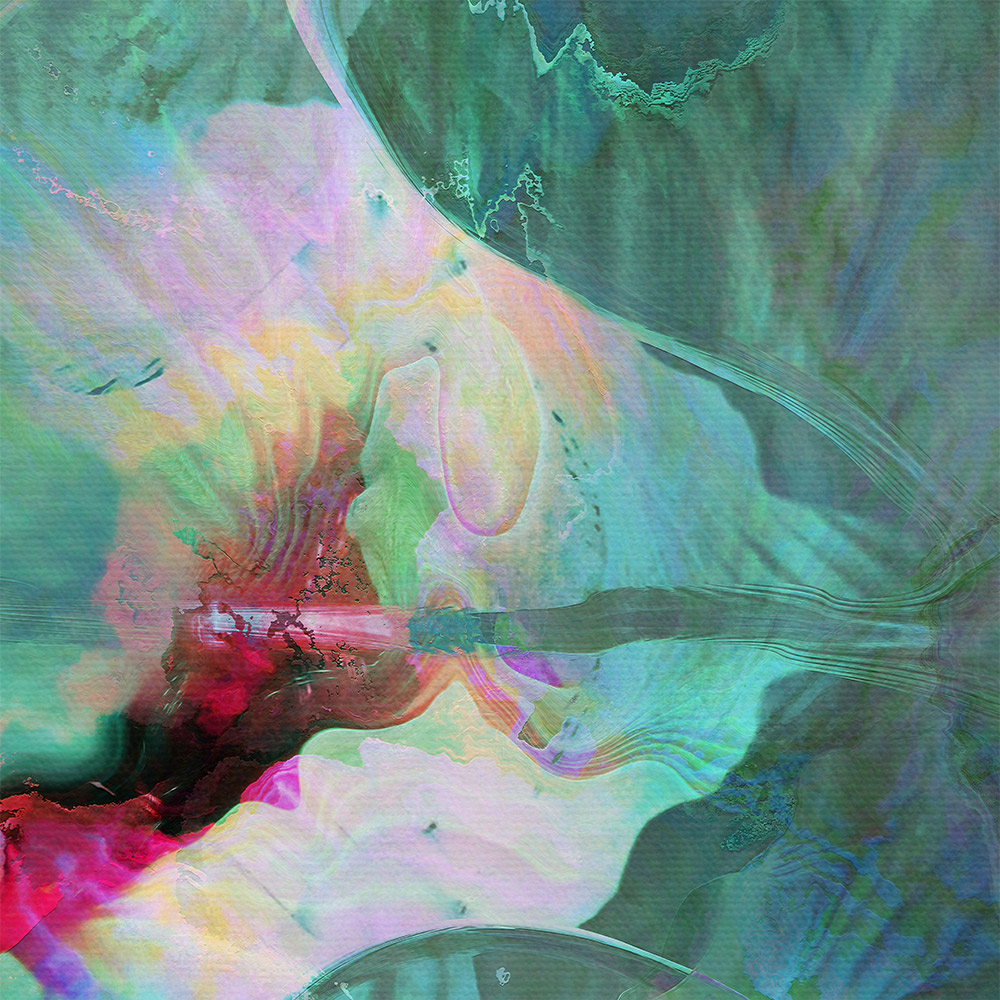
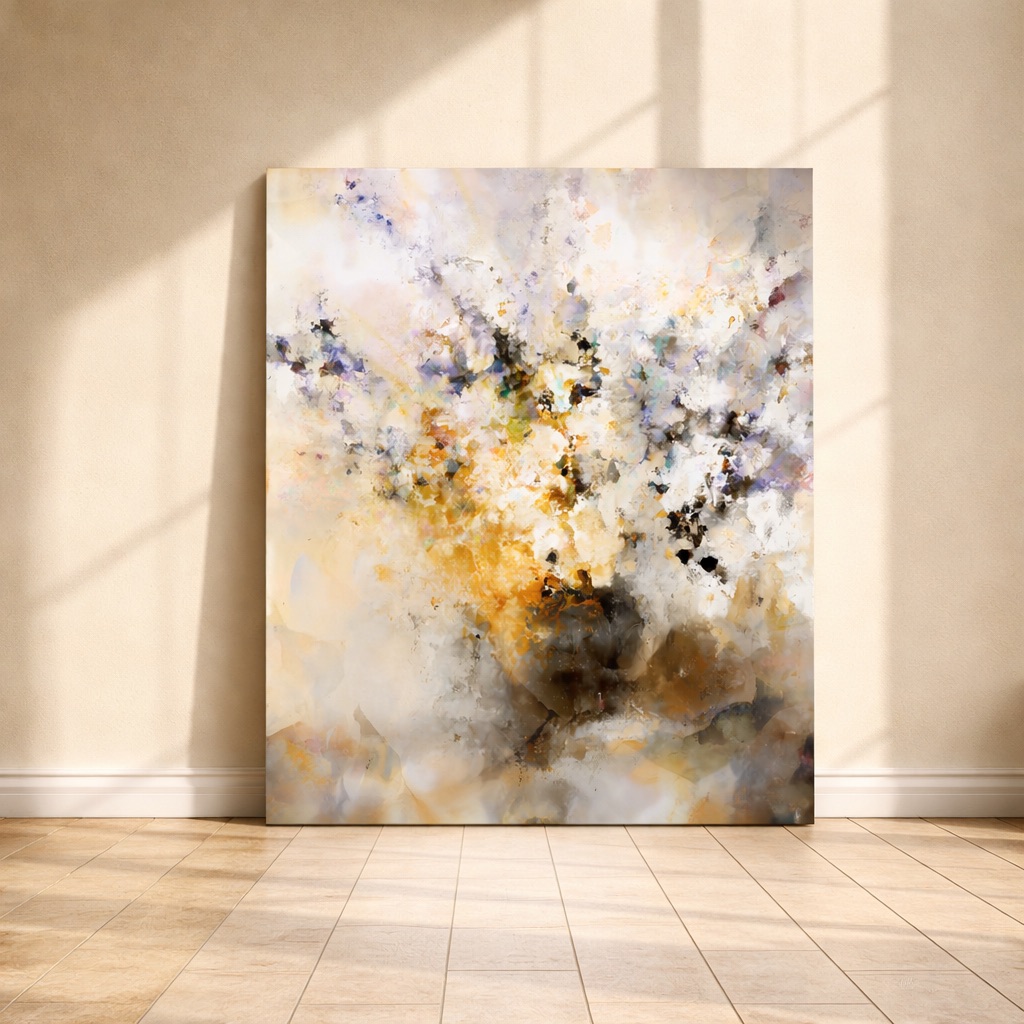
Close-up of nature-inspired abstract artwork texture.
A Sacred Place - Nature-inspired abstract art often draws from organic textures, flowing water, and atmospheric color.
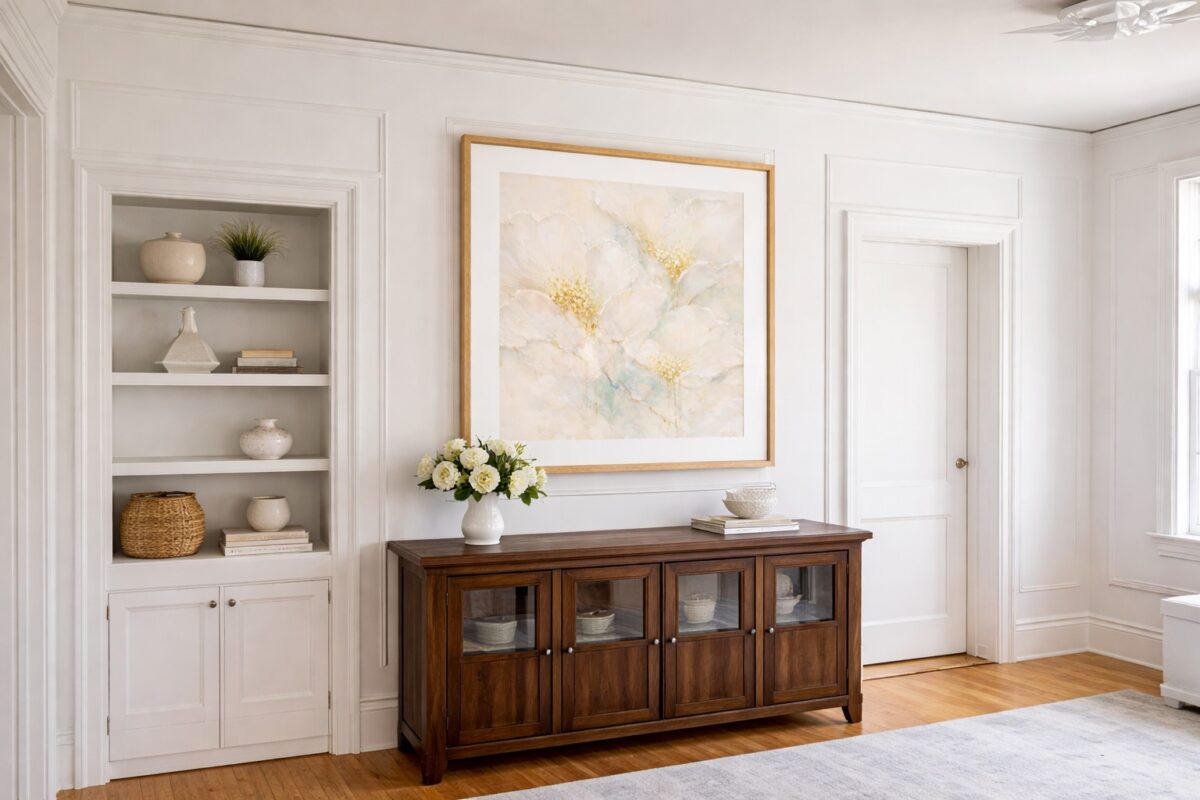
Framed abstract nature art in contemporary dining room hung above console table.
Champagne And Roses - Framed abstract nature art in contemporary dining room hung above console table.

Understanding Scale: The Key to Successful Art Placement

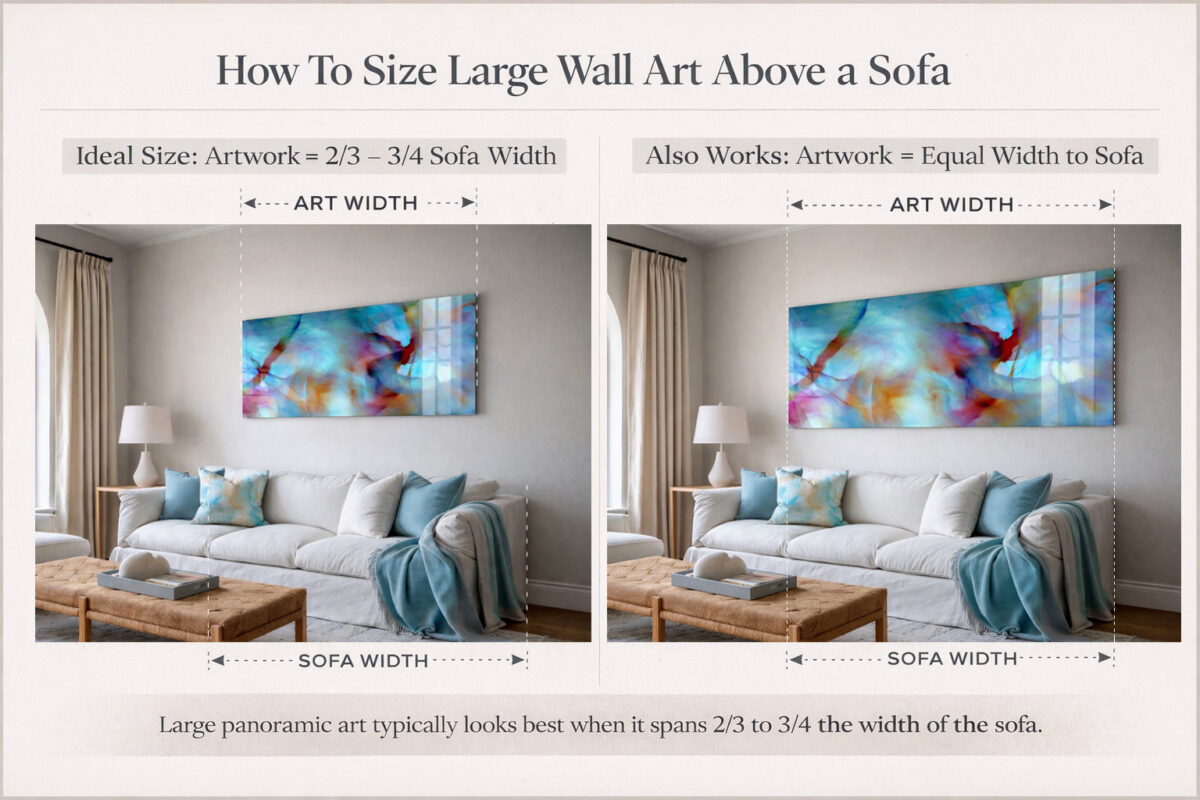
One of the most important factors when choosing wall art is scale. Interior designers often recommend that artwork span approximately two-thirds to three-quarters of the width of the furniture below it. This helps create visual harmony between the artwork and the surrounding interior elements.

Large panoramic artwork is particularly effective in spaces such as:

  • walls above sofas
  • areas above beds
  • long dining room walls
  • restaurant banquettes
  • reception desks
  • hallway corridors

Wide compositions mirror the horizontal lines of architecture and furniture, allowing the artwork to feel integrated with the space rather than simply hung on the wall. For living room inspiration specifically, the article Big Canvas Wall Art for Living Room – 7 Modern Ideas shows how large artwork can anchor a seating area and define the character of a room.

Diagram showing how to size large wall art above a sofa.
Large artwork should typically span two-thirds to three-quarters the width of the furniture below.

Framed vs Unframed Canvas: Presentation Matters

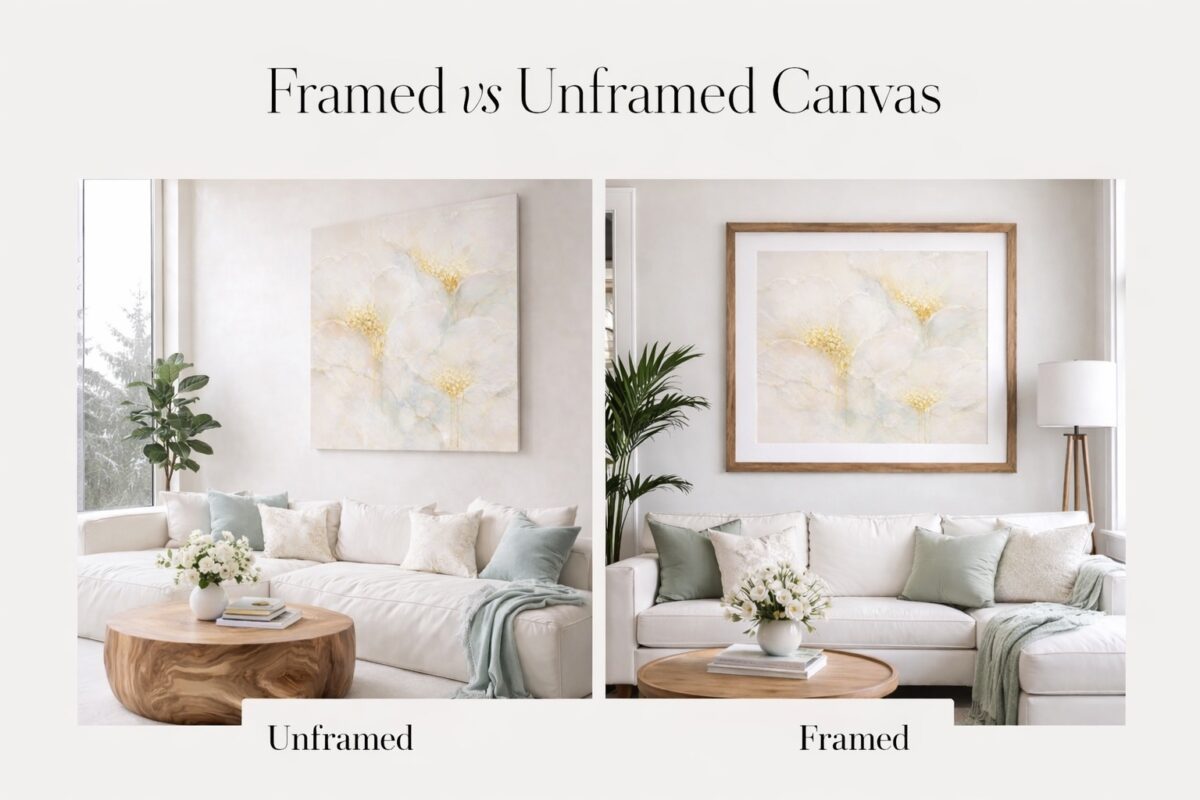
The way artwork is presented can dramatically influence the feeling of a space. Some collectors prefer the contemporary look of unframed canvas, where the artwork wraps around the edges and appears clean and minimal. Others prefer floating frames that give the painting additional structure and refinement.

Understanding the difference between these presentation styles can help you select the best format for your interior. For a deeper look at the topic, the article The Difference Between Framed vs Unframed Canvas explains the visual and design considerations behind each option.

You can also explore examples in Unframed Canvas Wall Art: 6 Stunning Examples, which highlights how large canvas artwork can be used effectively in modern interiors.

Example of framed vs unframed canvas wall art installed in contemporary living room.
Champagne and Roses - Wall art is presented differently on framed vs unframed canvas.

Large Abstract Art in Residential Interiors

In private homes, large wall art often becomes the visual centerpiece of the room. Living rooms frequently feature wide seating arrangements that benefit from a single panoramic artwork placed above the sofa. This creates a balanced composition while allowing the artwork to bring character and color into the space.

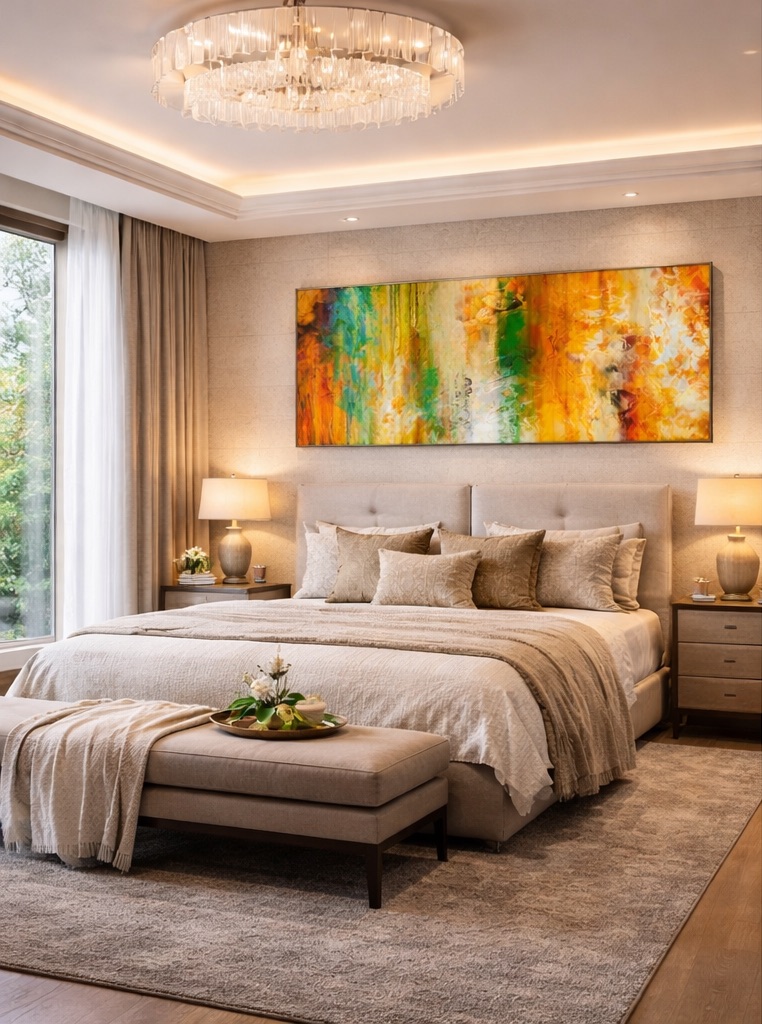
Bedrooms can also benefit from large artwork placed above the bed. A wide abstract painting reinforces the architecture of the room while introducing gentle visual movement that helps the space feel calm and grounded.

Large panoramic abstract wall art installed above a bed in a modern bedroom.
Just Being - Panoramic abstract wall art above a bed creates calm visual flow in contemporary bedrooms.

Hospitality, Corporate, and Wellness Interiors

Large abstract art is also widely used in commercial environments. Hotels, restaurants, and lounges rely on strong visual identity to create memorable experiences for guests. Large panoramic artwork works beautifully in these environments because it introduces energy and sophistication while still maintaining a refined atmosphere. Corporate offices increasingly incorporate large abstract art to soften architectural lines and introduce creativity into workspaces.

Meanwhile, wellness clinics, yoga studios, and therapy offices often benefit from artwork inspired by natural movement and calming color palettes. These spaces are designed to promote relaxation and emotional openness, and abstract art can subtly reinforce that atmosphere. You will find a more specific example of this type of healing artwork in this article Secret Garden: A Panoramic Abstract Artwork for Calm, Healing, and Interior Harmony

The article How Interior Designers Choose Large Abstract Art for Commercial Spaces [coming soon] explores how designers approach art selection in professional environments.

You can also see where large panoramic artwork works best in the article Where Large Panoramic Abstract Art Works Best in Interior Design.

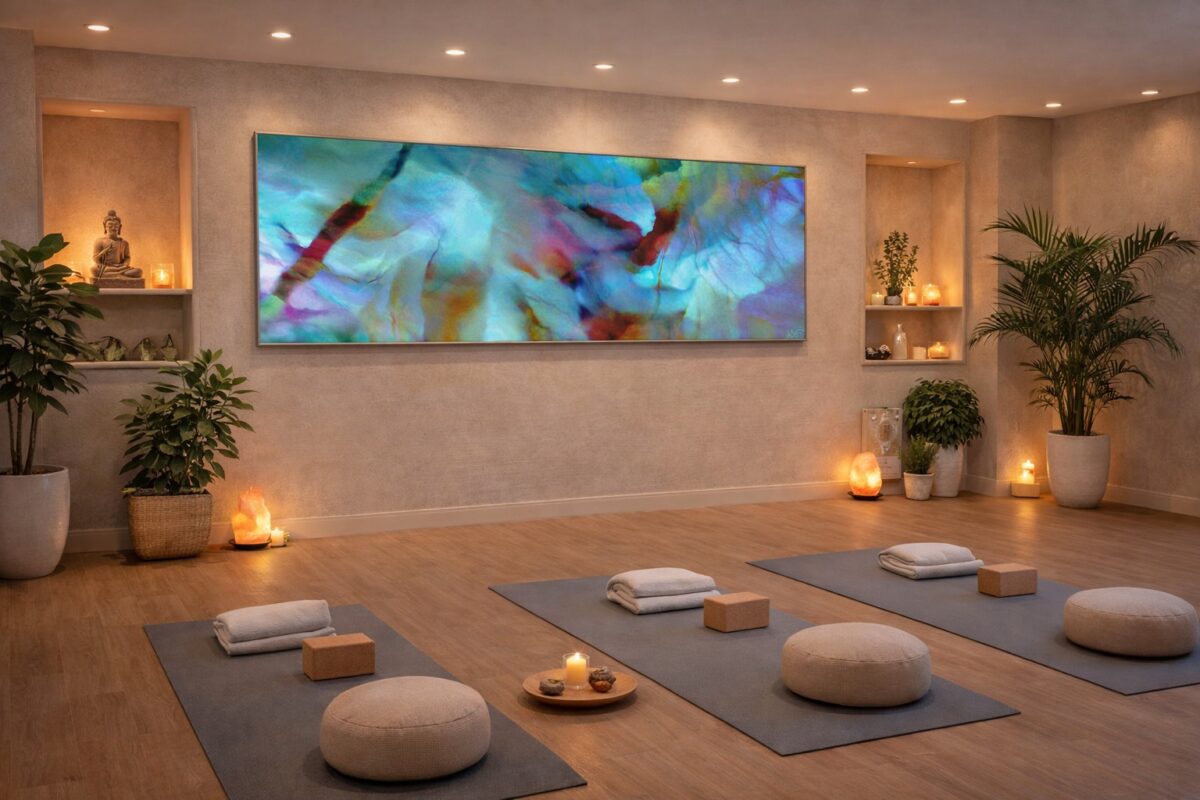
Large panoramic abstract artwork installed on a yoga studio wall.
Secret Garden - Large calming abstract artwork installed in a yoga studio meditation space.
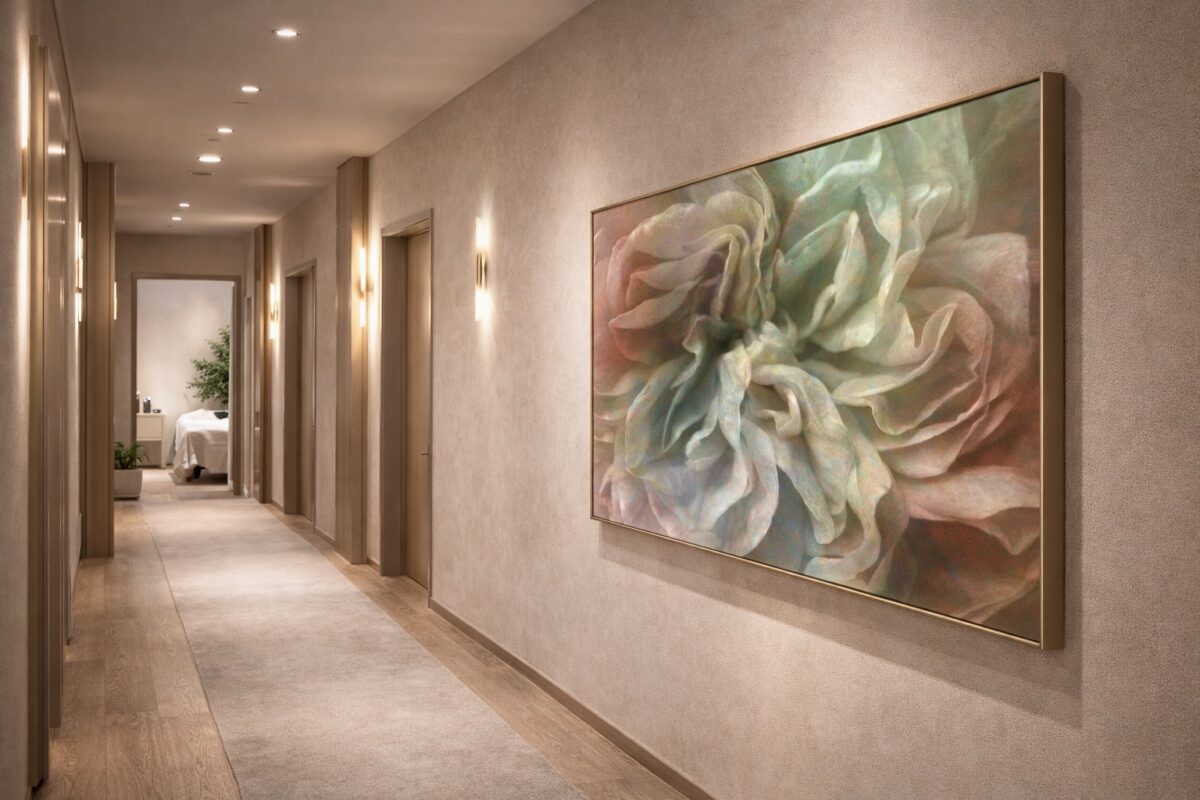
Wide abstract canvas art Flower Dance installed in a long hallway of wellness clinic
Wide canvas wall art Flower Dance helps anchor a long hallway in a wellness clinic.

The Role of Panoramic Abstract Art in Interior Design

Panoramic abstract paintings have become especially popular in modern interior design because they align naturally with architectural lines. Wide compositions mirror elements such as sofas, banquettes, reception desks, and long corridors. Instead of competing with the architecture, the artwork reinforces it.

Designers often choose large panoramic paintings to create a strong visual focal point without cluttering the room with multiple smaller pieces. The article Why Interior Designers Love Large Panoramic Abstract Art [coming soon] explores this design approach in greater detail.

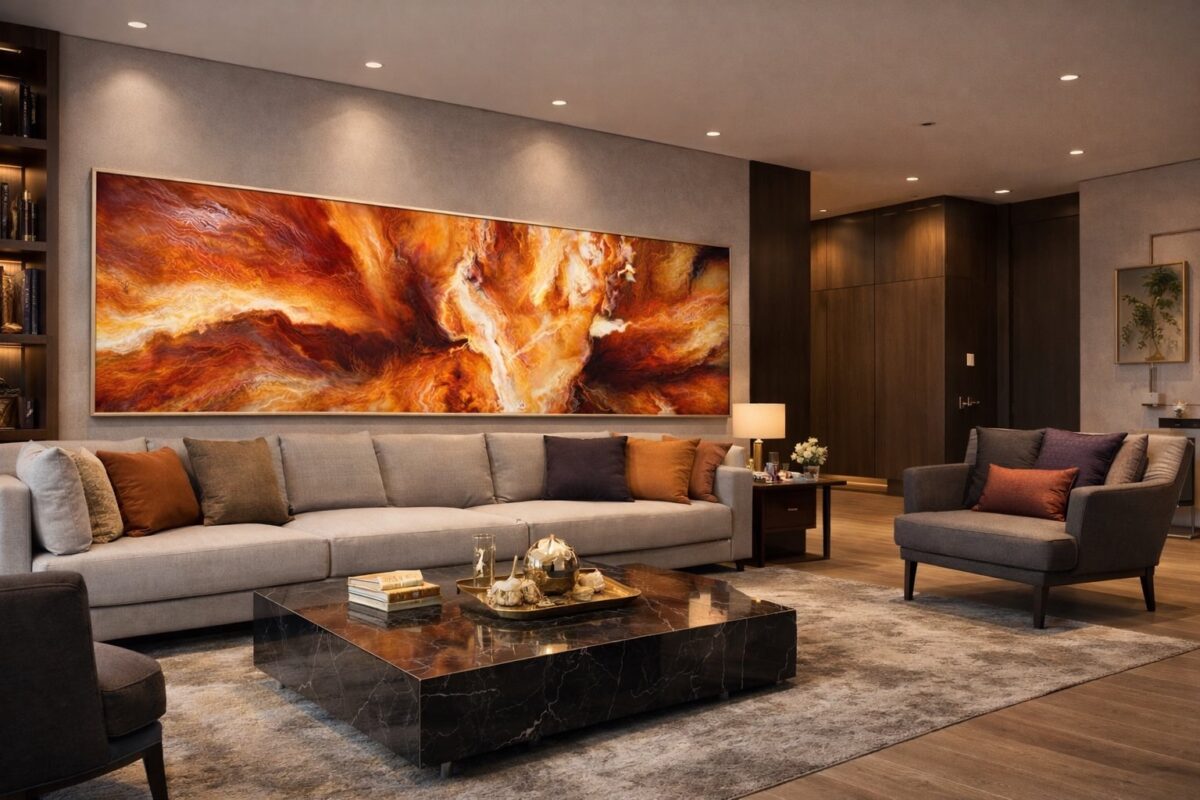
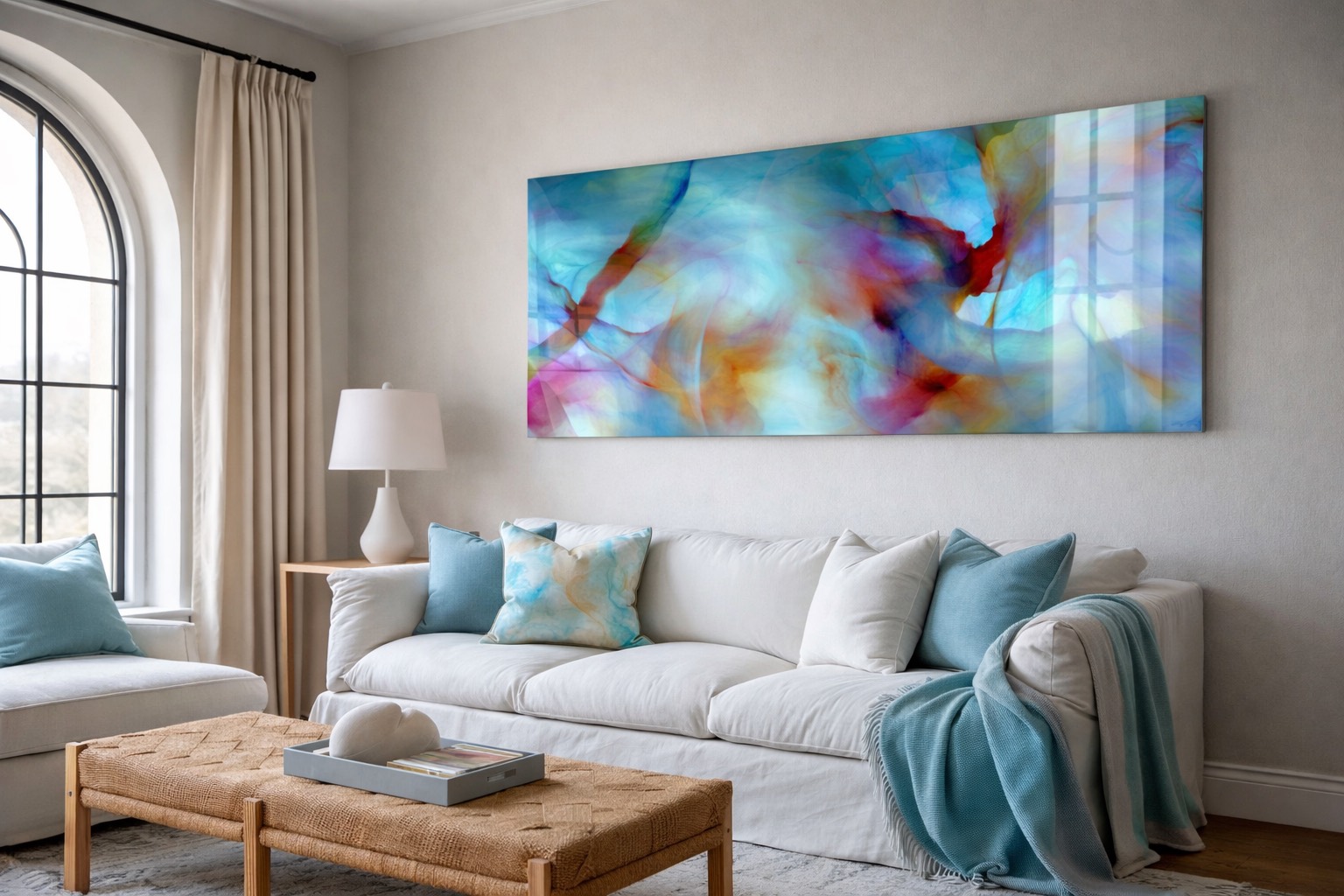
Large panoramic abstract wall art installed above a sofa in a contemporary living room interior.
Passion - Large panoramic abstract wall art installed above a sofa creates balance and visual focus in modern living rooms.
Large abstract wall art used by interior designers in modern interior design projects.
Interior designers often use large abstract artwork as a central focal point within modern interiors.

The Creative Process Behind Contemporary Abstract Art

Many contemporary abstract artworks today are created using innovative techniques that blend traditional painting with digital experimentation and layered textures. It helps to understand this new art form and the amazing capabilities it has in large-scale production.

The article The Creative Process Behind the Abstract Art of Jaison Cianelli explores how photographs, digital tools, and paint textures can merge to create complex abstract compositions. Not only are they visually appealing, but they can be produced in a custom capacity and in an oversized scale if need be. The final composition can also be installed in on a variety of mediums such as canvas, metal, or acrylic.
Modern artists are increasingly combining photography, digital layering, and physical textures to create new forms of visual expression. This evolving approach is explored in How Digital Mixed Media Is Changing Contemporary Abstract Art [coming soon].

Digital mixed media process of photography, painted texture, and digital abstraction and blending.

When Art Becomes Part of the Architecture

In contemporary interior design, artwork is increasingly treated as an architectural element rather than simply decoration. Large abstract paintings are often considered during the early stages of a design project because they help shape the visual identity of the room itself.

Through color, scale, and movement, a single artwork can unify architecture, furniture, and atmosphere in a way that smaller decorative pieces cannot. When chosen thoughtfully, art becomes part of the structure of the environment.

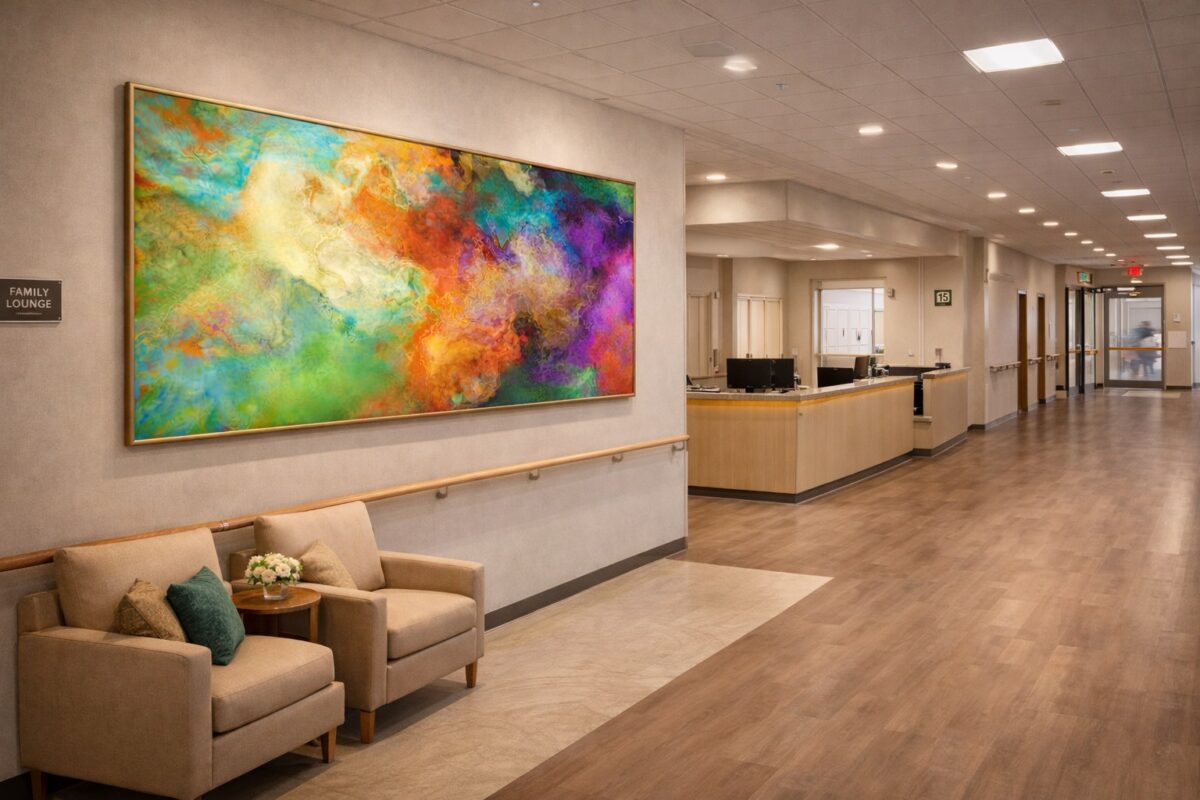
The article Mother Earth: A Versatile Abstract Painting for Luxury Interiors, Hotels, and Healing Spaces is a great example of how one abstract artwork can anchor and unify many different large spaces through color and form.

Abstract nature art Mother Earth installed in a hospital corridor creating a calming environment.
Abstract nature art Mother Earth installed in a hospital hallway for healing environment.

Choosing Art That Resonates with the Space

While design principles provide helpful guidelines, the most successful art placements ultimately come down to connection. Artwork that resonates with the emotional tone of a space—whether that space is designed for gathering, working, or reflection—often becomes one of the most meaningful elements within the environment.

When abstract art draws inspiration from nature, it can create a quiet sense of grounding that viewers feel instinctively. And in spaces where people live, work, relax, and heal, that sense of connection is what allows art to truly transform the environment.

If you need more information about choosing the best art for you and your space visit Art Buying and Decorating Tips: How to Choose Wall Art.

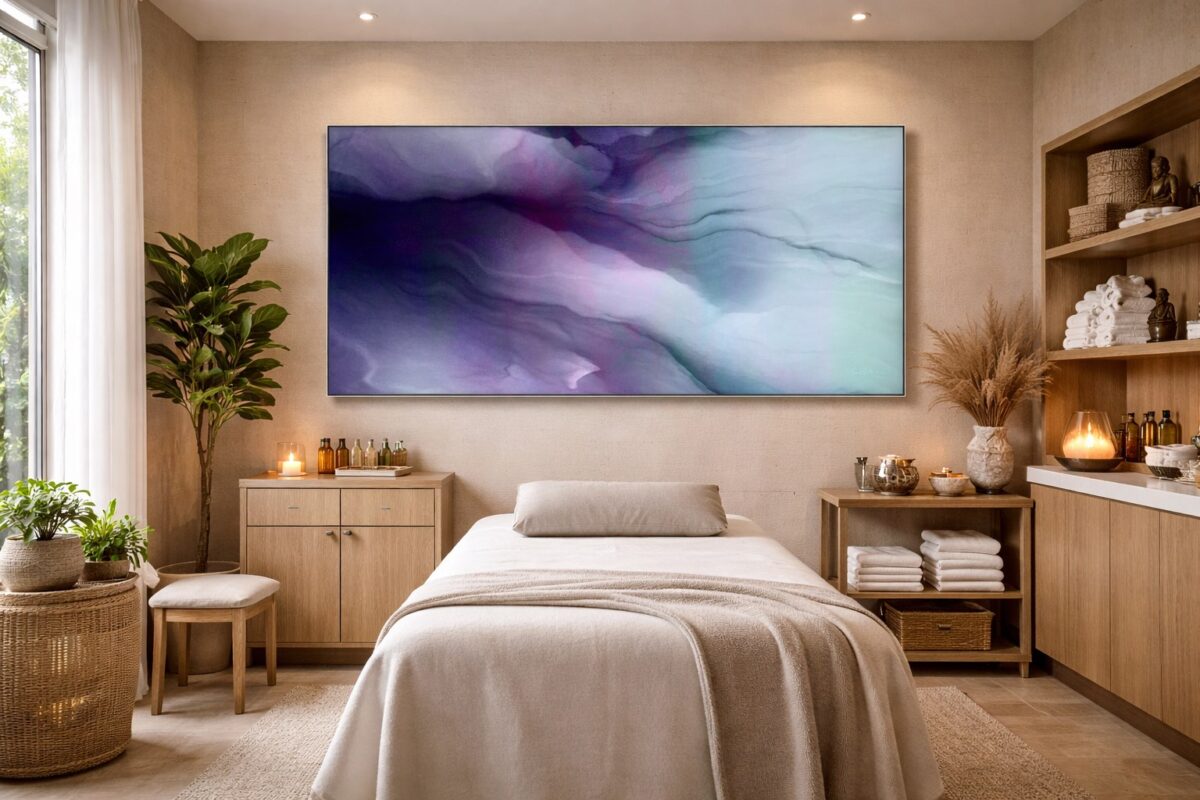
Large nature-inspired abstract artwork installed in a wellness acupuncture therapy room.
Nature-inspired abstract art creates calm and grounding energy in wellness acupuncture room.

Summary: Key Principles for Choosing Large Wall Art

  • Choose artwork that relates to the scale of the room
  • Panoramic formats work best for wide walls
  • Nature-inspired abstract art creates emotional connection
  • Framed vs unframed changes the design tone
  • Large artwork should function as a focal point

Every piece of wall art needs a home—and choosing the right wall art is about more than just finding something you like. The relationship between wall art and interior space plays a major role in how a room feels. When wall art and décor work together, they create balance, harmony, and visual richness.

Many collectors begin by choosing wall art they love and connect with emotionally, then adjust their interior design to support it. That approach works beautifully. Sometimes, all it takes is a small décor update—such as pillows, paint accents, or textures—to let the wall art become the focal point of the room.

If you’re buying wall art or art prints for your home, understanding your options will help you choose confidently and invest in pieces you’ll enjoy for years to come.

Canvas Wall Art
Canvas Wall Art "Honeybunch" - Abstract Floral

Understanding Contemporary and Abstract Wall Art

When choosing wall art for your home, it helps to understand the style you’re drawn to. Contemporary wall art and abstract wall art are especially popular in modern interiors because they focus on mood, movement, and expression rather than literal imagery. Abstract wall art, in particular, allows for personal interpretation, making it easy to connect emotionally while fitting into a wide range of décor styles.

If you’ve ever wondered how contemporary art differs from modern or abstract art—or which style best suits your space—it’s worth exploring the nuances. Understanding these distinctions can help you choose wall art that aligns with both your design aesthetic and your lifestyle. This guide on contemporary art, modern art, and abstract art—what’s the difference breaks it down and can help you choose artwork that aligns with both your style and your space.

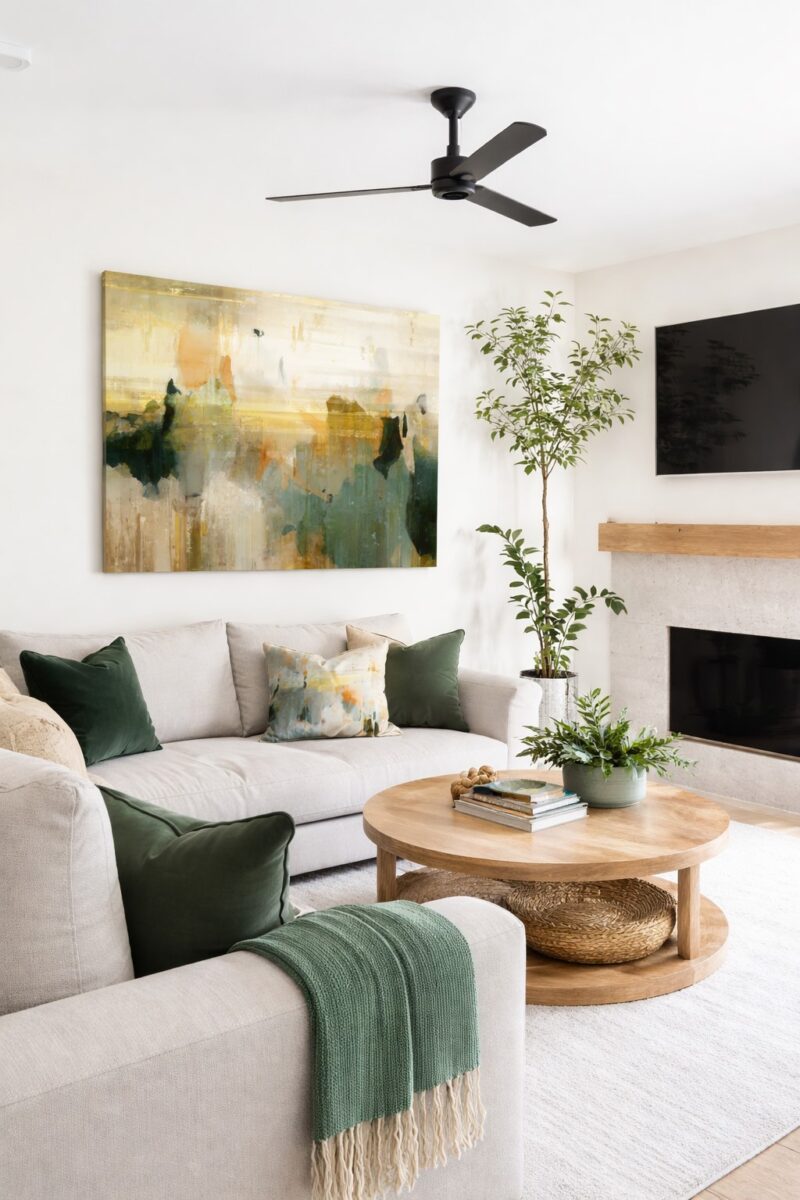
Wall art for living room hung above sofa
Wall Art “Sea Gold" - Unframed Gallery Wrapped Canvas

Choosing the Right Wall Art Print Medium

Selecting the right wall art medium can dramatically affect how artwork looks and feels in your space. Each print option offers a distinct aesthetic and practical benefit.

Metal Wall Art Prints
Metal wall art prints are a favorite for modern interiors. Known for sharp image clarity and luminous color, they create a bold, contemporary statement. Printed directly onto aluminum with a glossy finish, metal wall art floats slightly off the wall for a sleek, gallery-style presentation—ideal for minimalist, industrial, or modern spaces.

Canvas Wall Art Prints
Canvas wall art is one of the most popular choices for large abstract wall art. Canvas offers a timeless, painterly feel and holds up beautifully over time. The subtle texture adds warmth and depth, while gallery-wrapped edges provide a clean, frameless look that works especially well in contemporary interiors and living rooms.

Acrylic Wall Art Prints
Acrylic wall art has a glossy, glass-like appearance with striking depth and saturation. This modern wall art option is highly durable and performs well in humid environments, making it a great choice for kitchens, bathrooms, or coastal-inspired spaces. The glass effect also pairs well with subject matter related to water, lights, and anything that is reflective.

Fine Art Paper Wall Art
For those who prefer framed wall art, fine art paper prints offer exceptional quality and longevity. Papers like Hahnemühle Photo Rag produce rich color with a soft, refined surface, making them ideal for collectors seeking museum-quality wall art.

Unframed wall art wide acrylic print above sofa in contemporary living room
Wall Art "Secret Garden" - Unframed Acrylic Print

Coordinating Wall Art With Your Interior Design

The wall art you choose may influence how you decorate your space—or vice versa. Start by observing the main colors already present in the room. If those tones appear in the wall art, even subtly, the space will feel more cohesive.

You can enhance this connection by repeating colors from the wall art in small décor accents such as pillows, throws, or decorative objects. A neutral living room, for example, can be completely transformed by a large, colorful abstract wall art piece paired with complementary accents.

Texture and form are equally important. Heavily textured wall art pairs beautifully with tactile materials like wood, stone, or woven fabrics, while organic or floral abstract wall art often complements spaces with plants and natural elements.

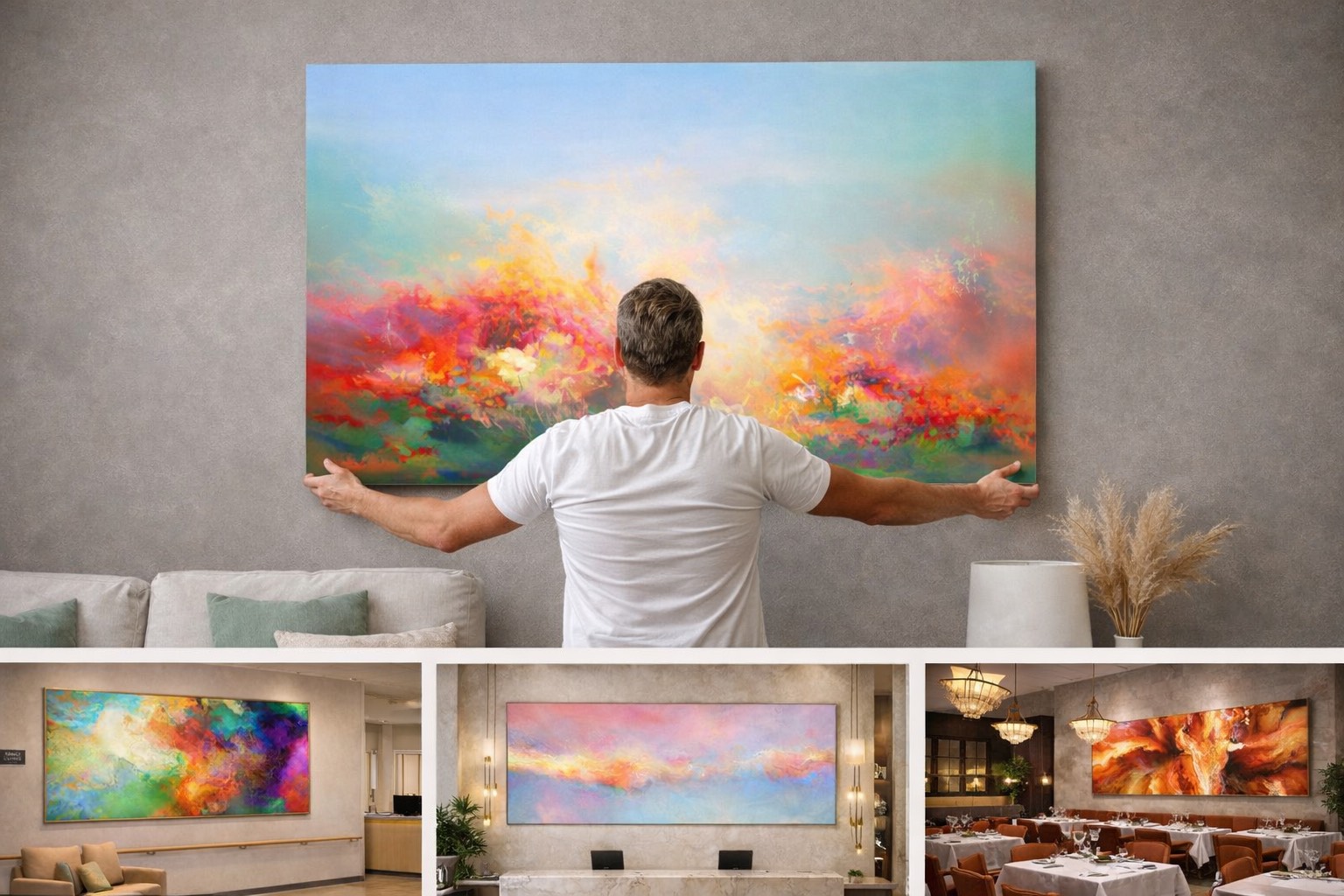
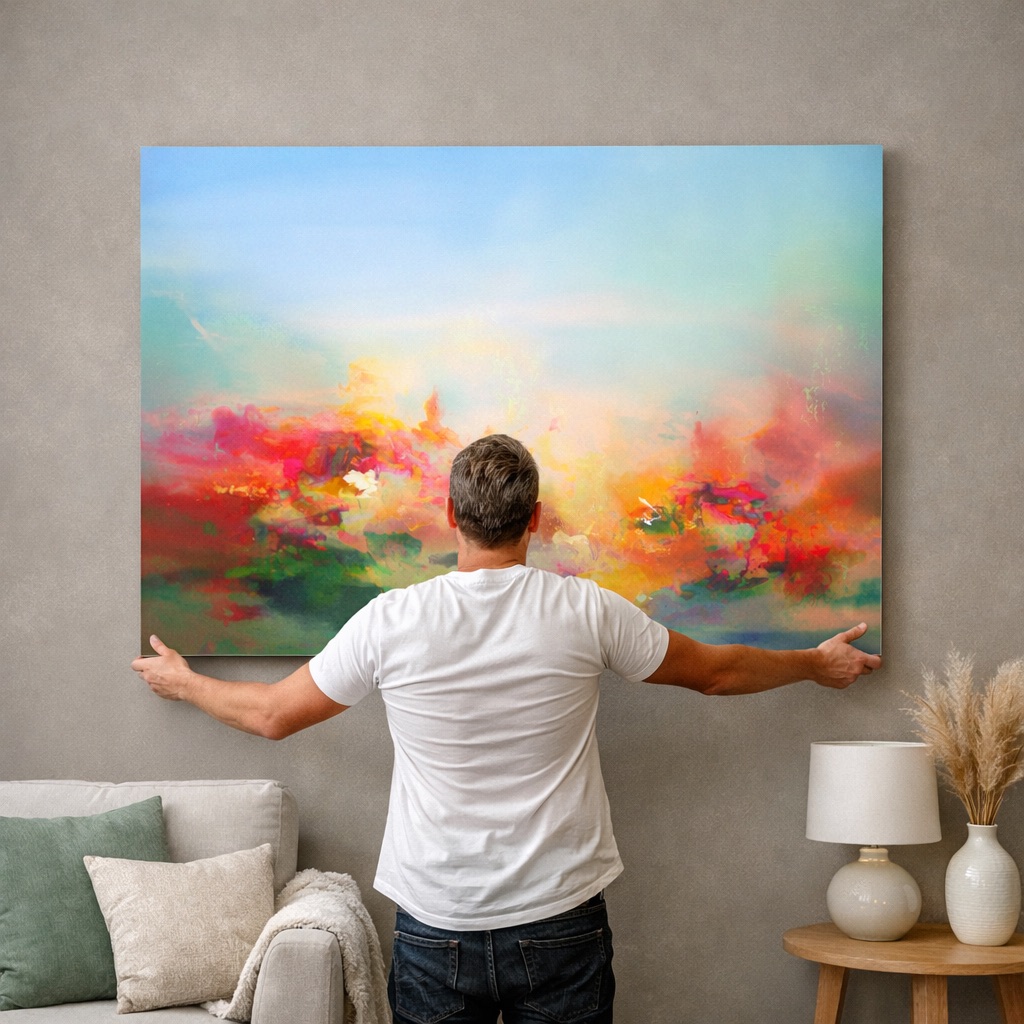
man adjusting large wall art and learning how to decorate

Choosing the Right Size and Orientation for Wall Art

One of the biggest advantages of buying wall art prints is flexibility in size. Before purchasing, measure your wall and use painter’s tape to outline where the artwork will hang—this helps visualize scale and balance.

Large wall art tends to have greater emotional and visual impact, especially in living rooms and bedrooms. Wide horizontal wall art works well above sofas and beds, while tall vertical pieces complement high ceilings or narrow walls. When hanging multiple artworks, aligning them along the same visual horizon creates a clean, cohesive look.

Large-scale contemporary and abstract wall art is especially effective when you want to make a strong design statement. Oversized canvas wall art anchors furniture, defines open spaces, and elevates modern interiors—particularly in living rooms. For inspiration, explore these big canvas wall art ideas for the living room to see how scale and abstraction work together beautifully.

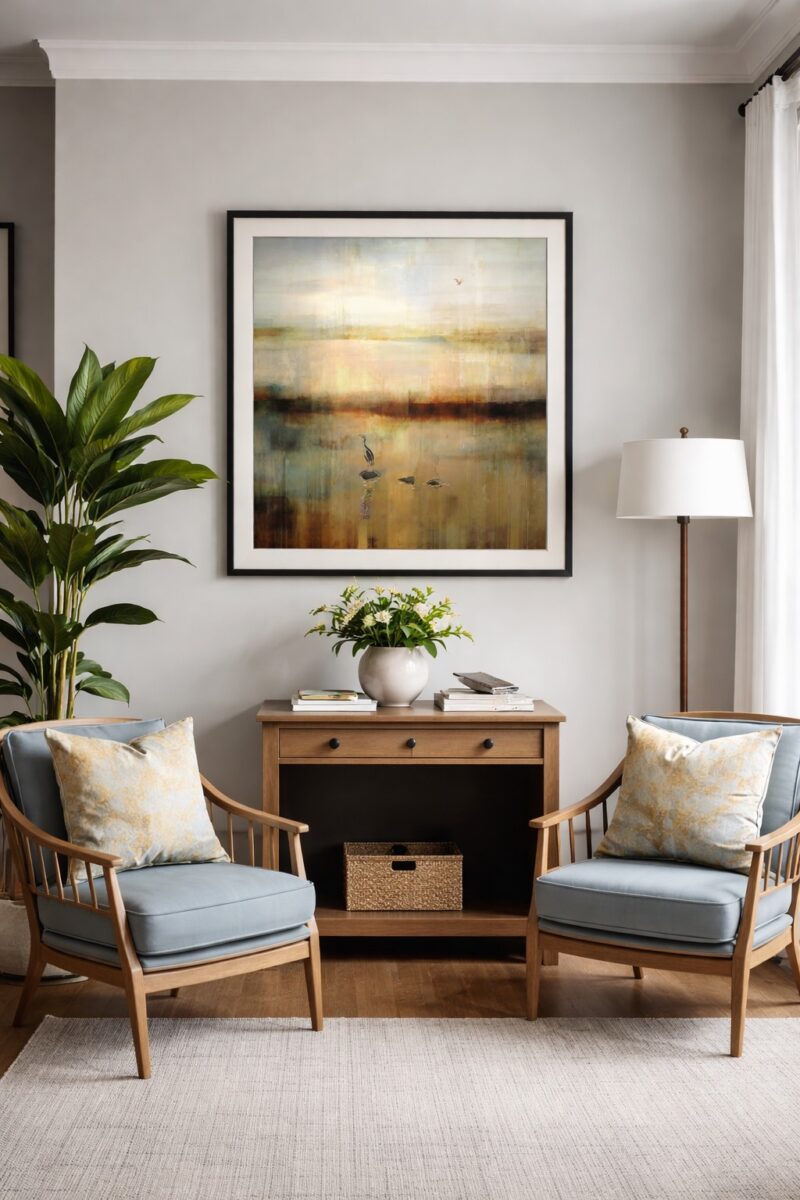
framed wall art hanging on wall
Framed Wall Art “Potter Pond" - Contemporary Landscape

Considering Energy, Mood, and Emotion in Wall Art

Wall art isn’t just visual—it carries energy and emotion. Some wall art evokes calm and serenity, while other pieces feel bold, expressive, or dynamic. Consider how you want the room to feel and choose wall art that supports that intention.

Abstract wall art often references natural elements such as water, earth, light, or movement. A quiet space may benefit from energetic wall art, while a busy room might call for softer, more atmospheric tones. Color theory and feng shui principles can also offer guidance when choosing wall art that feels balanced and intentional.

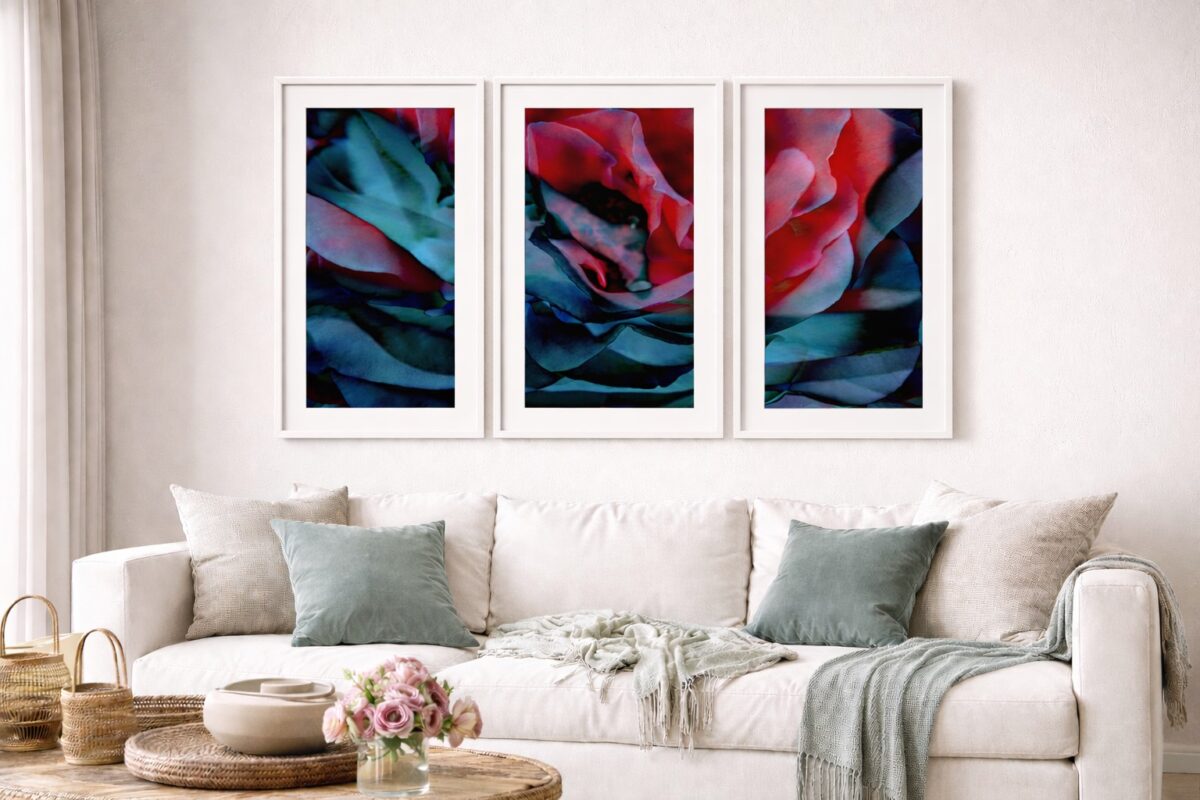
modern three-piece triptych canvas wall art with even spacing on a living room wall
Modern Canvas Art "Romance" - Framed Three-Piece Triptych Set

Lighting Your Wall Art Properly

Lighting plays a crucial role in how wall art is experienced. Natural light brings out color and texture during the day, while accent lighting helps artwork stand out at night. Overhead picture lights, wall washers, or nearby floor lamps can turn a piece into a true focal point.

Be mindful of glare, especially with glossy mediums like metal or acrylic. Adjusting angles and light placement ensures the artwork remains vibrant without distracting reflections.

Proper placement is just as important as choosing the artwork itself—especially with large contemporary or abstract pieces. Hanging art at the right height and spacing ensures it feels intentional and balanced within the room. Whether you’re installing a single statement piece or a large canvas above furniture, understanding best practices can make all the difference. This guide on how to hang large modern wall art in a living room or bedroom walks through simple, professional tips to help your artwork look its best.

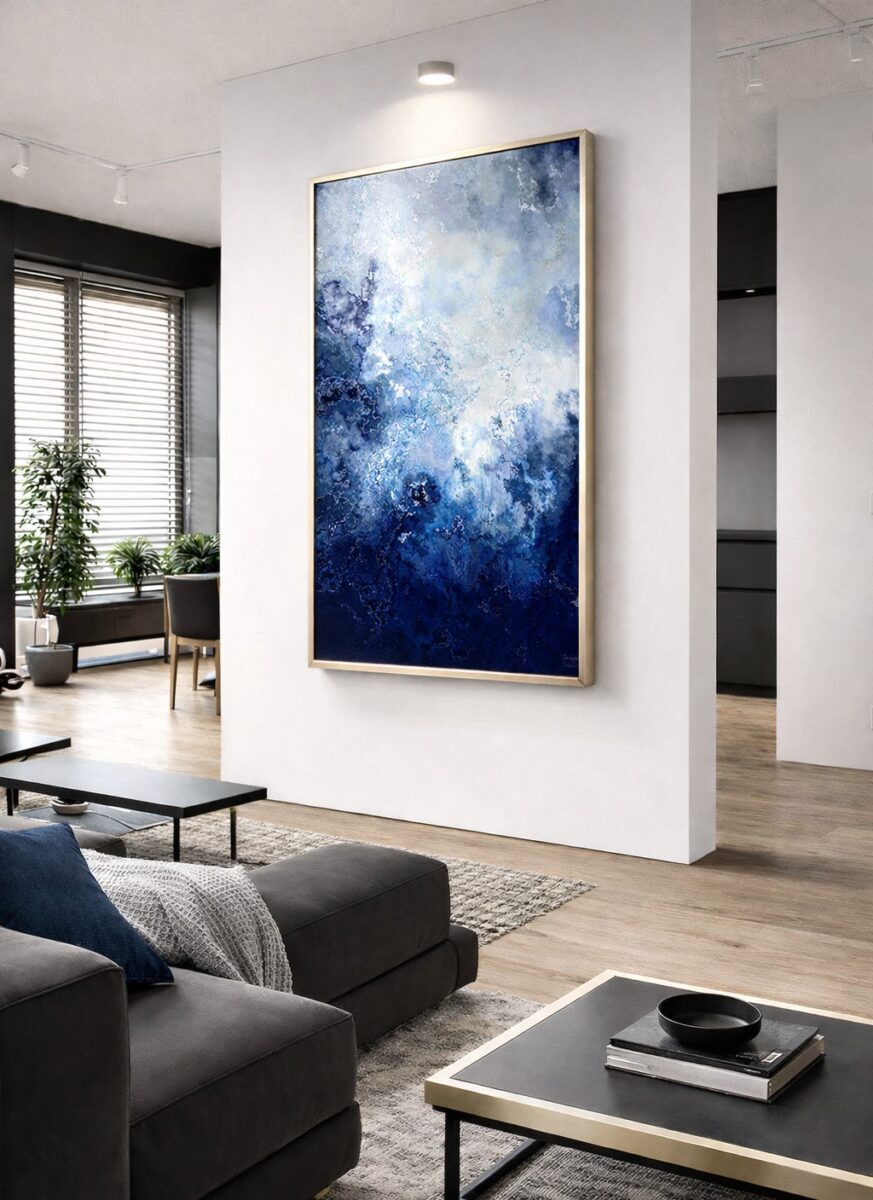
big vertical contemporary abstract wall art on side wall living room
Big Abstract Painting “Sapphire Dream" - Framed Canvas Wall Art

Final Thought

Choosing wall art is a personal and rewarding process. When you understand size, medium, color, and mood, you’re not just decorating—you’re shaping how a space feels and functions. Thoughtfully chosen wall art can transform a room and become something you connect with every day. If you need more help or just broader information visit: A Complete Guide to Choosing Large Abstract Wall Art for Homes, Offices, and Wellness Spaces.